
The Apple Macintosh (1984)
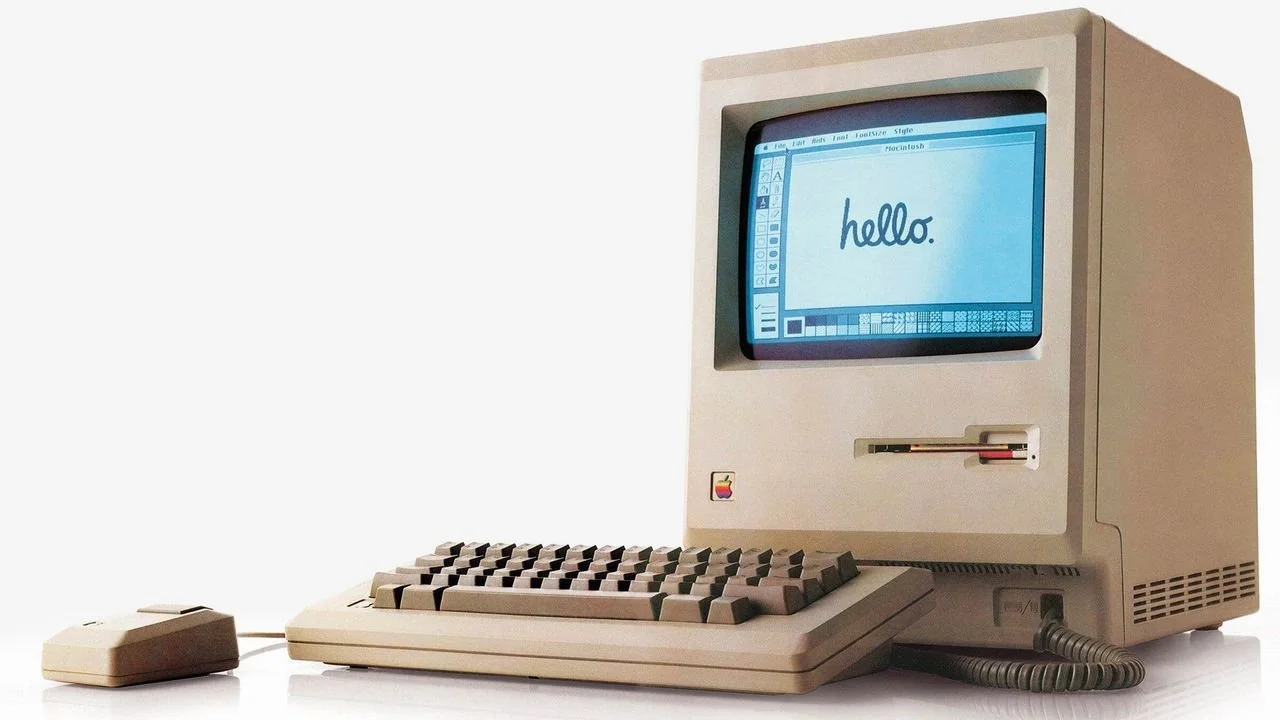
The Macintosh’s genius lies in its radical rethinking of the user-computer relationship. Apple understood that computing could be more than just lines of code—it could be visual, intuitive, and even fun. By packaging powerful technology into a compact, approachable form, the Macintosh made personal computing truly personal.
When Apple introduced the Macintosh in 1984, it wasn’t just another personal computer—it was a paradigm shift. As the first commercially successful computer with a graphical user interface (GUI) and a mouse, the Macintosh fundamentally changed the way people interacted with technology. Its compact, all-in-one design, friendly user experience, and revolutionary marketing approach set it apart from the complex, text-based systems that dominated computing at the time. More than just a product, the Macintosh was a statement—one that positioned computers as tools for creativity, not just for business or science.
The Macintosh redefined computing by putting people at the center of the experience. Its impact can still be felt today, influencing everything from smartphones to modern operating systems. The Macintosh wasn’t just a better computer—it was a new way of thinking about technology. Nearly four decades later, its core philosophy remains unchanged: technology should serve creativity, not the other way around.
Assessment
-
Designed to democratize computing, making technology accessible to individuals, designers, and creatives—not just corporations and engineers.
-
One of the first computers to introduce a graphical user interface, mouse-based navigation, and WYSIWYG (What You See Is What You Get) document editing, setting a new standard for usability.
-
The stool is structurally efficient and incredibly durable, requiring only three legs instead of four while maintaining perfect stability. The stackable design allows for space-saving storage, making it ideal for both homes and public environments.
-
Unlike the cold, industrial look of its competitors, the Macintosh had a friendly, almost human-like quality, with soft curves and an inviting beige plastic shell. It was designed to feel like an object you’d want on your desk rather than a piece of intimidating machinery.
-
The Macintosh wasn’t just a product—it was an identity. Its playful yet sophisticated character, combined with Apple’s groundbreaking “1984” Super Bowl ad, positioned it as a tool for rebels, creatives, and visionaries.
-
The GUI and mouse-based interaction were inspired by research from Xerox PARC, but Apple’s execution was far more refined and intuitive, making advanced technology feel effortless.